
How Colour Matching Booths Keep Print Colours Accurate
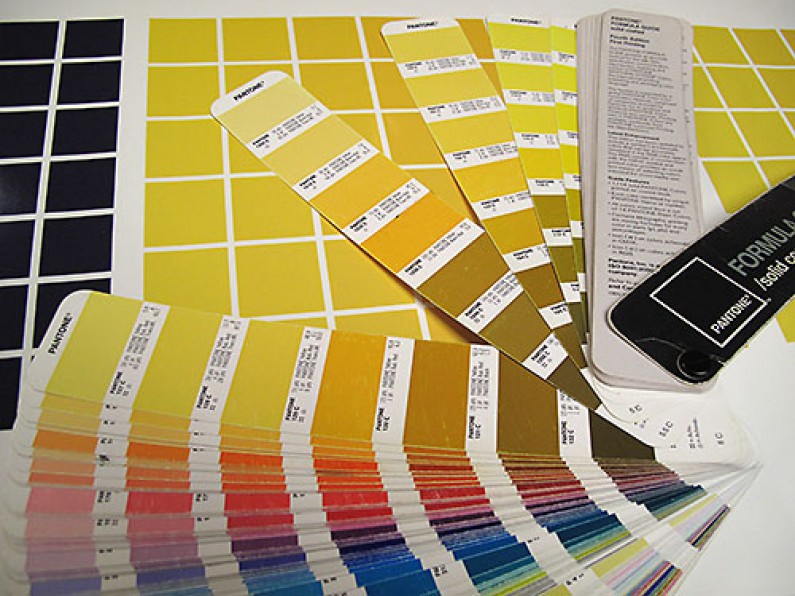
Why colour matching booths matter for print accuracy
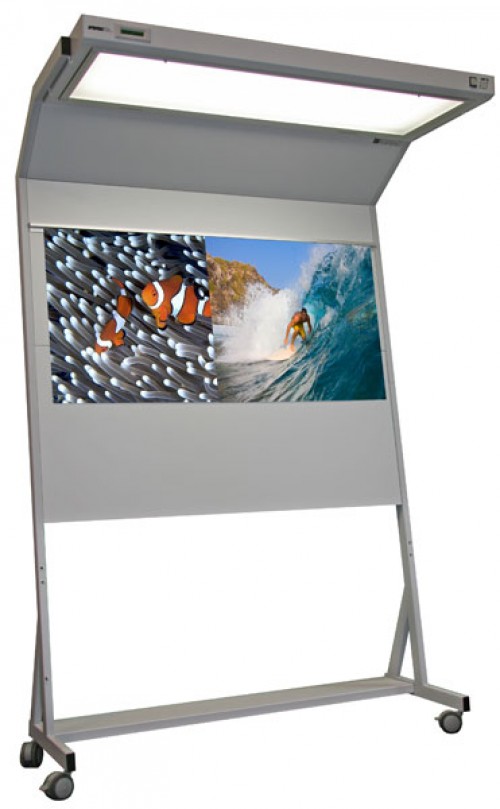
In previous articles, I covered how we control colour using design software and our printers. There's another important piece of hardware in the mix too, a colour matching booth. It's not some strange device you climb inside and lock the door on, it's a station with special fluorescent tubes that illuminate vertically mounted prints and proofs from above.
The big problem with manually matching hardcopy colour is lighting conditions. There are so many variables, fluorescent tubes ranging from warm to cool, halogen, daylight (both sunny and cloudy), incandescent bulbs, and now LED lighting, all of which emit different colour. There's no perfect fix, but a good starting point is an industry standard, and that standard is D50, more commonly known as daylight.
Our GTI colour matching booth uses specially balanced tubes that emulate D50, essentially a clear day at noon, around 5003 Kelvin colour temperature. It's the industry standard lighting condition for graphic technology and photography. The real benefit is consistency. When all our devices are working toward the same goal, we get better, more predictable results, and by adopting an industry standard, we avoid ending up in a closed loop where our colour matching only makes sense within our own four walls.
Wherever you display a print, or any object for that matter, the colour is influenced by the lighting around it. You've probably noticed your own clothes can look like a different colour under different lighting, some more dramatically than others. It gets technical fast. We can't emulate every type of light from every manufacturer to match against manually, but by working to a single standard, there's far greater consistency among everyone who's adopted it too.
For specific lighting conditions, we can also allow for this through software profile building. Because the lighting source in a room sets the white point, the colour of white, we can set the software to adjust colours in a file to suit. For example, if you know your lighting is F11 fluorescent, we can set that as the lighting source for the software to adjust to, removing any colour cast. This is particularly useful for greyscale work.
FAQs
What is a colour matching booth used for in printing?
A colour matching booth is a lit viewing station used to check how printed colours look under standardised lighting, so prints and proofs can be compared consistently rather than being affected by whatever light happens to be in the room.
What is D50 lighting in print and photography?
D50 is an industry standard lighting condition that emulates daylight at around 5003 Kelvin, roughly the colour temperature of a clear day at noon. It's used so that colour can be judged consistently across different printers, screens, and viewing conditions.
Why does lighting affect how printed colours look?
Different light sources, such as fluorescent, halogen, daylight, incandescent, or LED, emit different colour temperatures, which changes how printed colours appear. Using a standardised lighting condition like D50 removes this variable when checking colour accuracy.
Custom Banners in Christchurch and Across NZ: Materials, Sizes and Choosing What's Right for Your Job
.jpeg)
Choosing a Signage Company in Christchurch: Questions to Ask Before You Commit