
Hand Painted Signage: How Traditional Signwriting Still Works
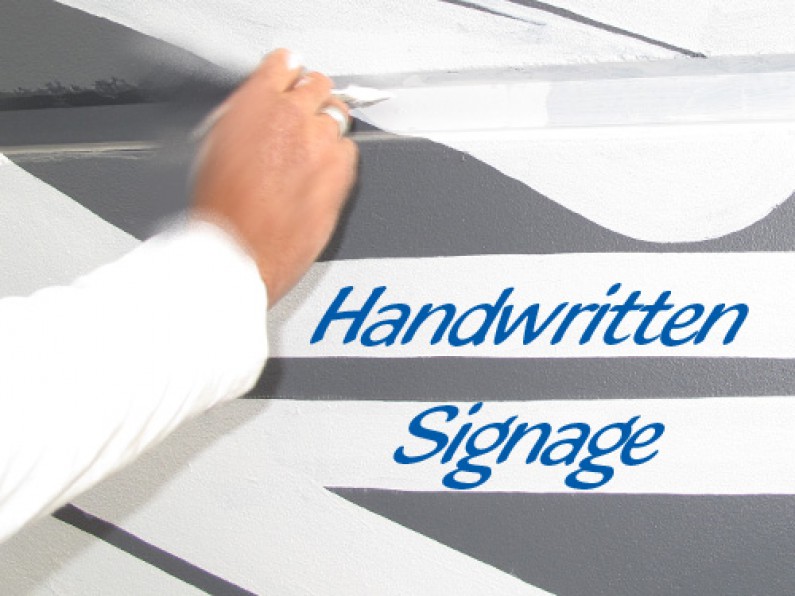
The trusty brush still has a place at Adgraphix
We're at the cutting edge of sign and print technology, but that doesn't stop us keeping to our roots, there's still a place for the trusty brush. Digital technology has its place, but there isn't really an alternative to traditional brushed signage, particularly for exterior building work. Size isn't a problem either, most of the work we do this way is large renderings of company logos.
Have a look at the process below, which walks through how a logo gets painted onto a concrete wall.
Pouncing
This is a pen drawing of the logo on paper. All of the pen lines have small holes punched along them.
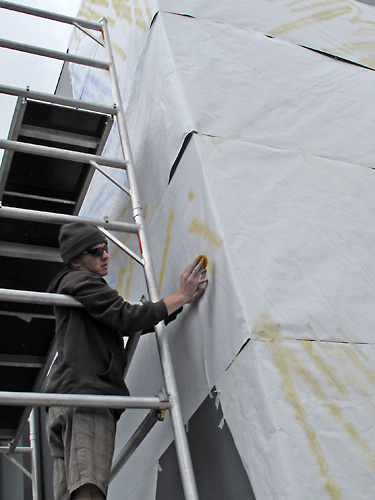
Transferring the outline
Once the pounce is taped in place, we pat chalk dust through the holes to leave an imprint on the building.
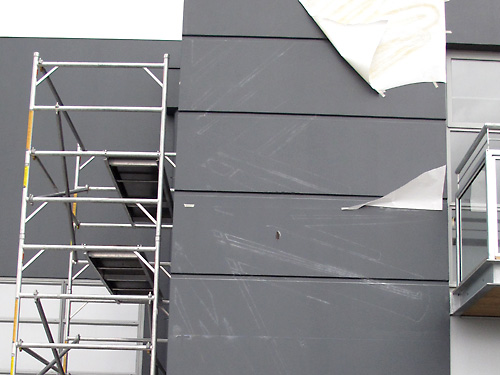
Removing the pounce
The pounce is removed, leaving the chalk powder outline of the logo ready for painting.
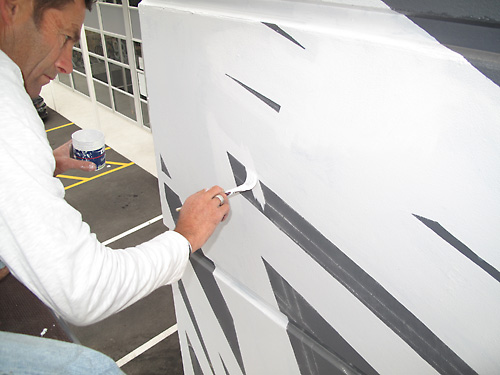
Signwriting
The logo edges are cut in using traditional signwriting brushes, then the rest is filled in.
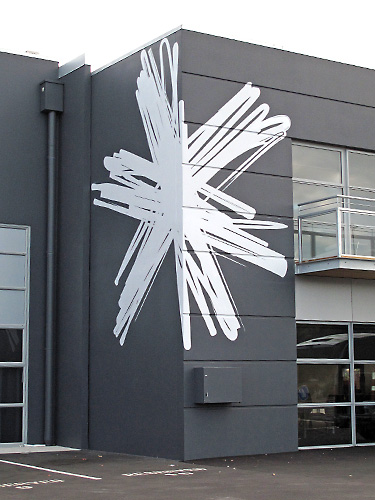
The finished result
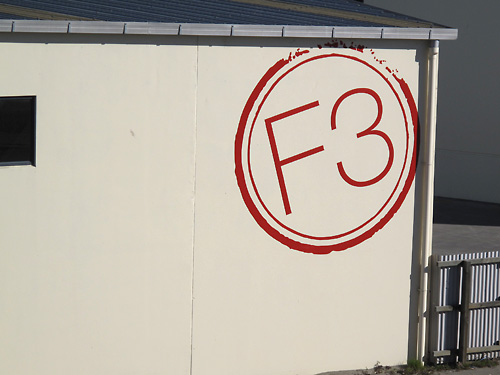
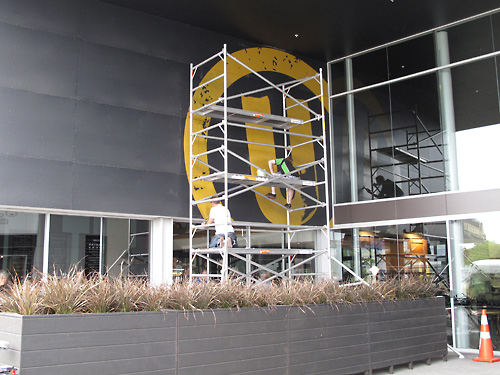
After a couple of coats, it's all done and looks great. See below a couple more examples!
FAQs
What is pouncing in signwriting?
Pouncing is a traditional technique used to transfer a logo or design onto a surface before painting. A paper pattern of the design is punched with small holes along its outlines, then chalk dust is patted through the holes to leave an imprint on the surface below, which is then used as a guide for hand painting.
Is hand painted signage still used for building signs?
Yes. While most modern signage is digitally printed, traditional brush signwriting is still used, particularly for large exterior building signage and logos, where a hand painted finish is either preferred or better suited to the surface.
Can hand painted signage be done at a large scale?
Yes. Large renderings of company logos are one of the more common applications for this technique, size isn't a limiting factor.
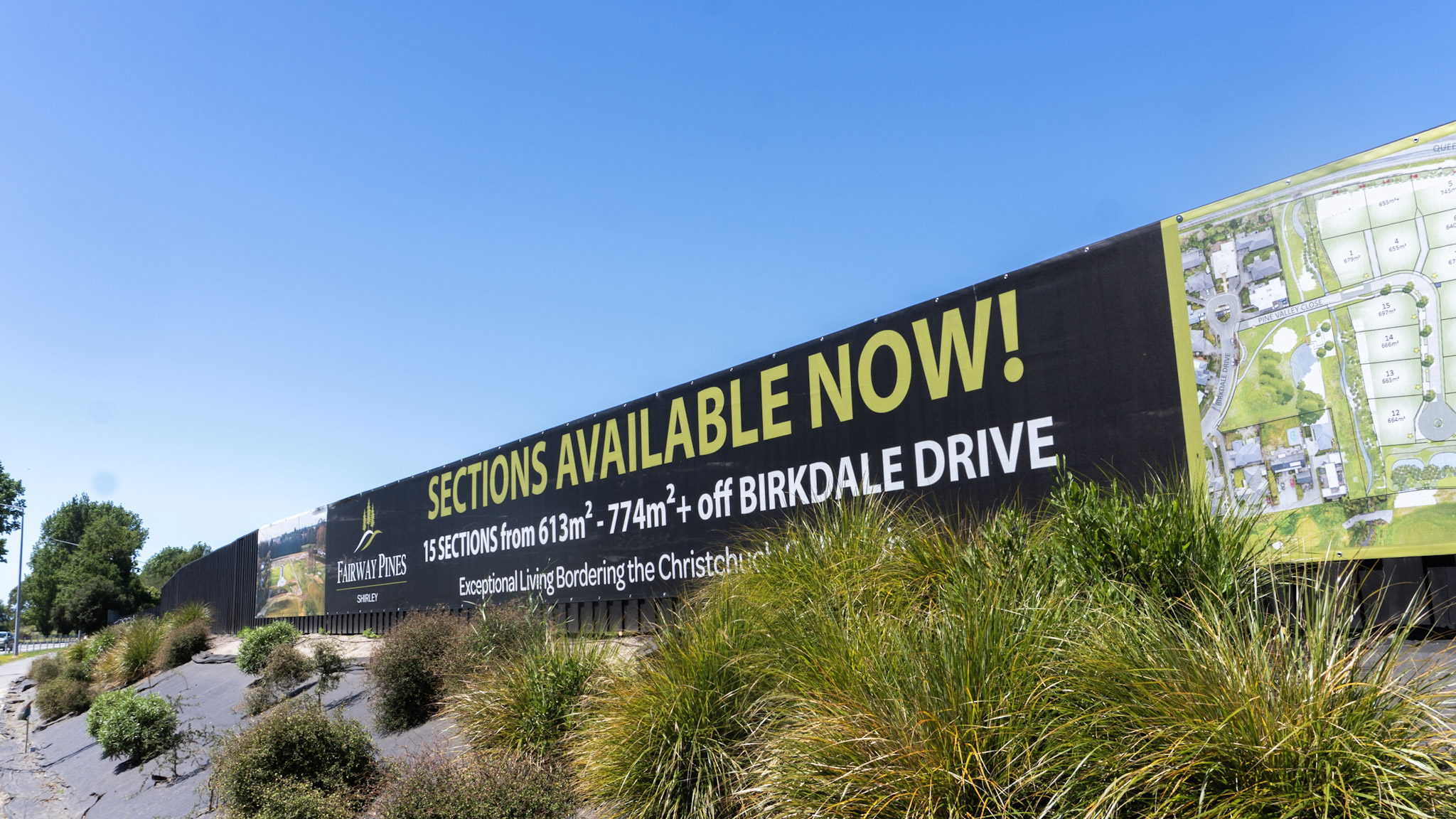
Custom Banners in Christchurch and Across NZ: Materials, Sizes and Choosing What's Right for Your Job
.jpeg)
Choosing a Signage Company in Christchurch: Questions to Ask Before You Commit