
White Ink Digital Printing: What It Is and How We Use It
Why white ink changed digital printing
Have you thought about how white ink could work for you? Digital printing has changed the way we think about print. Short runs are common now because digital has made them affordable, but digital printing always had one big limitation, you couldn't print white. That meant everything printed had to start on a white surface to get vivid colour. The arrival of white ink changed all of that. We've been printing with white ink since 2008.
What we can print white ink onto
Flatbed printing on rigid materials
With flatbed printing, we can put a rigid material straight onto our press and print directly onto it. That might be aluminium, corrugated iron, thick plywood, MDF, plastics or glass. So why print an imitation wood grain when you can print directly onto real wood? Colour accuracy isn't a problem either, if your substrate is coloured, we lay down a layer of white ink underneath first so you still get a bright, vivid image. Clear materials can be printed on the reverse side, which protects the image from damage. Black and white images can even be printed onto black material. The options are pretty much endless.
On specialty materials like brushed metals, flooding white behind the entire image isn't always the best approach. Better results often come from selectively placing white behind chosen objects only, so the natural brushed metal effect still shows through the rest of the image. This kind of considered, material-led approach is a big part of what we do in our specialty and fabrication work.

Brushed aluminium, with an isolated fill of white behind the knob.
Roll media and flexible materials
We're not limited to printing on sheets either. We can image onto roll media too, things like clear static cling film for shop window promotions, and other flexible materials in roll form.
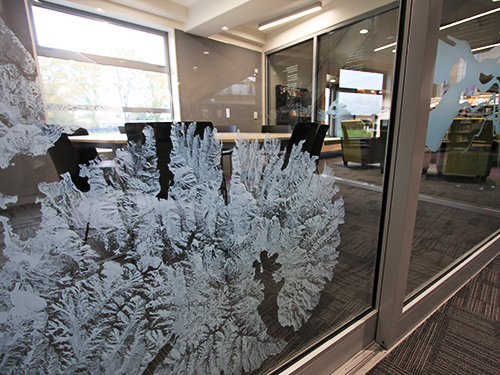
Optically clear film, imaged with white ink only, applied to glass.
White ink comes in a few different formulations, and we offer two printing systems that use it.
UV curable ink vs water based latex ink
UV curable ink cures on the surface of the substrate and has a satin, slightly textured finish. It's versatile, which makes it a good option for unusual substrates that other inks tend to struggle to adhere to.
Water based latex ink produces a purer white that stays white for longer as it ages. Latex ink tends to take on the finish of whatever it's printed on, which can actually be a desirable effect. It goes down as a thin, smooth film, giving a look that's similar to a traditional screen print finish.

Direct to timber print, with white also sitting behind all the coloured elements.
Where white ink printing works well
White ink is a genuinely exciting medium to work with, and there's a lot of room to get creative. If you've got an idea, run it by us, we might just be able to make it happen. That said, even standard applications like menus, directional panels, window decals and shop displays can be lifted considerably just through smart material choice and the use of white ink.
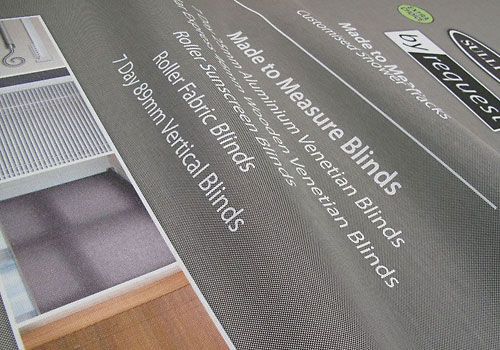
Direct printing to roller blind fabric, with white behind all images.
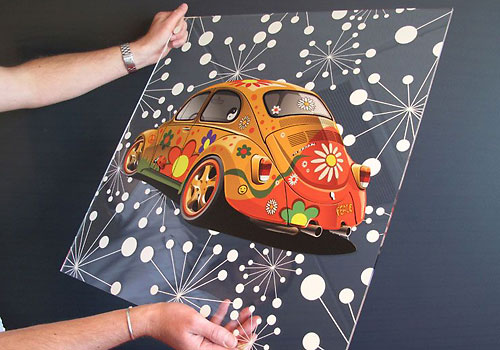
Creative use of white on clear acrylic, with white behind the car graphic to make it opaque.
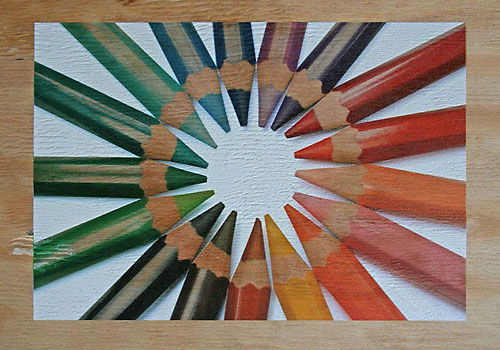
Solid fill of white behind an image, printed direct to a plywood panel.

White ink text printed directly onto stained timber.
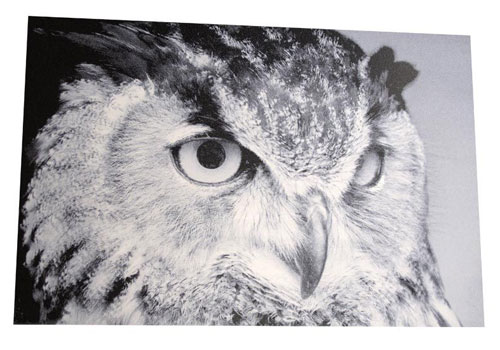
A greyscale image printed using only white ink onto a black substrate.
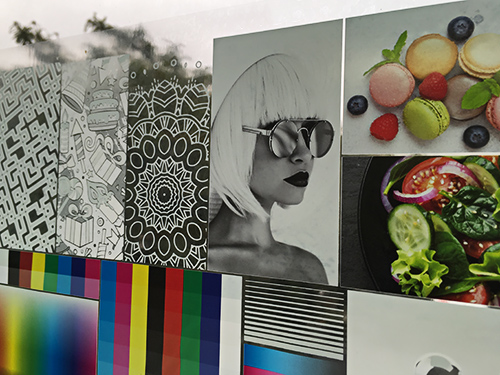
White ink printed onto static cling film for windows.

A solid fill of white ink printed behind photos on bare timber.
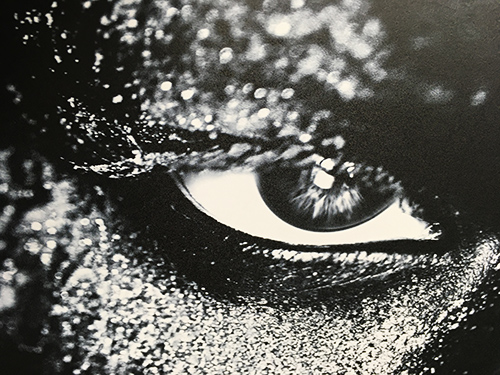
White ink printed onto a black substrate.
Interested in something a bit different, like turning a plain floor into a feature? The same white ink and flatbed technology behind this work also underpins our floor graphics.
FAQs (see below)
What is white ink in digital printing?
White ink is a printing medium that lets us print directly onto coloured, clear, or dark materials without needing a white base surface first. Before white ink, digital printing could only produce accurate colour on white substrates.
What's the difference between UV curable and water based latex white ink?
UV curable ink cures on the surface of the material and has a satin, slightly textured finish, making it a good fit for unusual substrates. Water based latex ink produces a purer white that holds up better over time, and tends to take on the finish of the material it's printed on.
Can you print directly onto materials like timber, metal or glass?
Yes. With flatbed printing we can place rigid materials such as aluminium, plywood, MDF, plastics and glass directly onto the press and print onto them, including using white ink underneath to keep colours vivid.
Can white ink be used on clear or coloured materials?
Yes. On coloured substrates, we lay a layer of white ink underneath the design first to keep colours bright and accurate. On clear materials, we can print white ink on the reverse side, which also helps protect the image from damage.

Custom Banners in Christchurch and Across NZ: Materials, Sizes and Choosing What's Right for Your Job
.jpeg)
Choosing a Signage Company in Christchurch: Questions to Ask Before You Commit