
Creative Window and Glass Decoration Beyond Etching
More than etching: creative window and glass decoration
There's more to window and glass decoration than just etching. These days, etching is rarely achieved with sandblasting, it's more commonly done using self-adhesive films. There's a huge range of window films that imitate the sandblasted look, often used with logo elements, striping and patterns for safety and privacy purposes. Digital printing and profile cutting have opened up a world of options for interesting window effects. Below are some examples of how our customers have used glass and window decoration.
We do produce and apply standard etch striping for health and safety purposes too, most simply, to stop people walking into doors and windows. These can be done as logo repeats, bands of striping, or decorative patterns. The examples below include some frosting, but also show other creative ways to add graphic elements to glass using digital print and coloured vinyl.
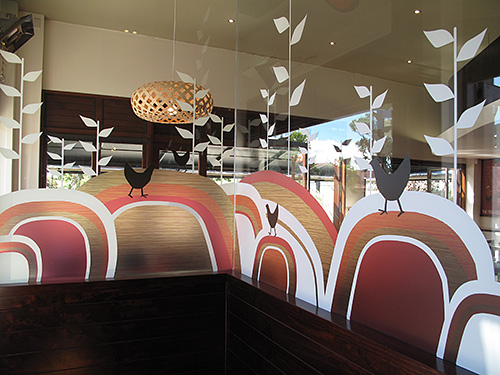
Restaurant entrance partition
This example is clear self-adhesive vinyl applied to a restaurant entrance partition. We digitally printed the graphic using UV curable ink, which gives a less transparent finish than other ink types. The white areas were also printed, then contour cut to shape. Internal lighting diffuses through the graphic, which doubles as a privacy screen.
Decorative store window pattern
This decorative window pattern uses profile cut self-adhesive graphic elements applied to the inside of the glass. The shapes repeat across the entire window and meet at a large circular clear space, framed in metallic gold and black, which required precise alignment and careful focus from our applicators. This kind of design adds dimension to a window display without overpowering it.
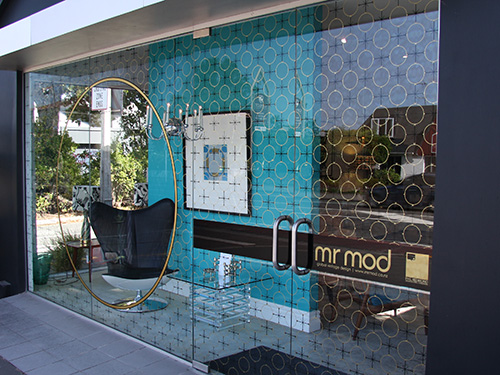
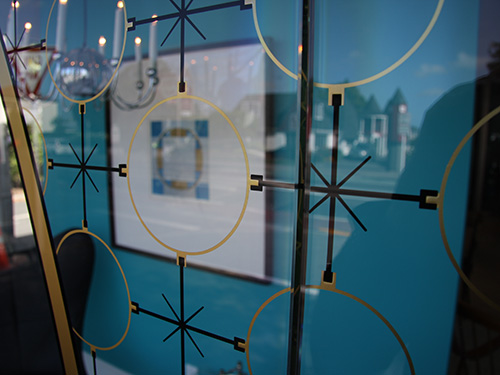
Close-up of the graphic elements.
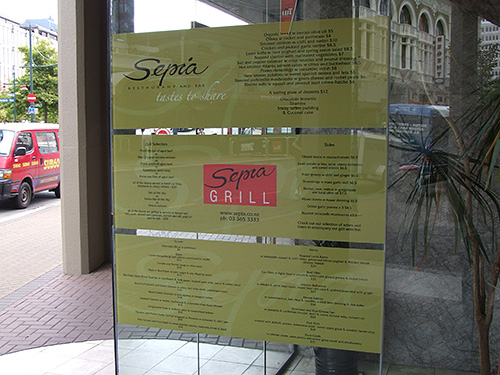
Restaurant menu window signage
A good, simple use of window signage, a restaurant menu presented as cut panels. It's applied to the inside of the glass, which creates a finish with depth and reduces the likelihood of vandalism from passersby.
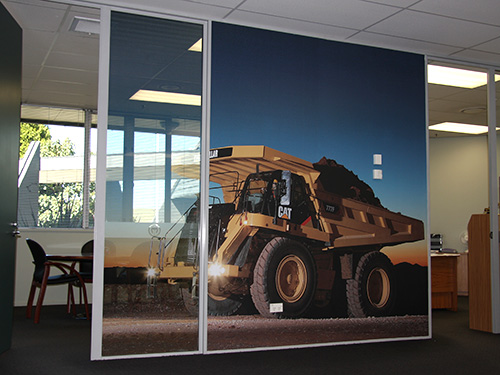
One-way film for an office window
This is an interesting use of one-way film. Typically, one-way film needs brighter light on the image side and darker light on the other to work properly. That's the case here, with bright light coming through the external office window. Depending on the viewing angle, it shows varying degrees of transparency.
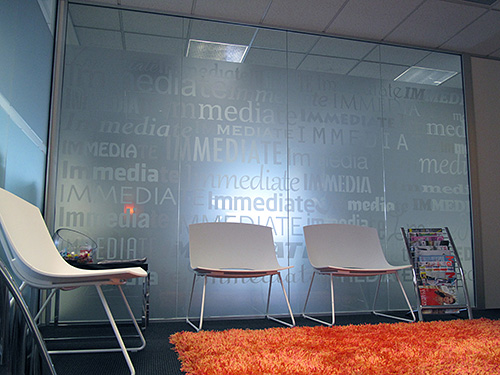
Boardroom glass wall
Classic self-adhesive etch films applied to both sides of the glass here, separating the boardroom from reception. Using three types of dusted and frosting film creates different intensities of reflected light, while giving complete privacy to whoever's in the meeting room.
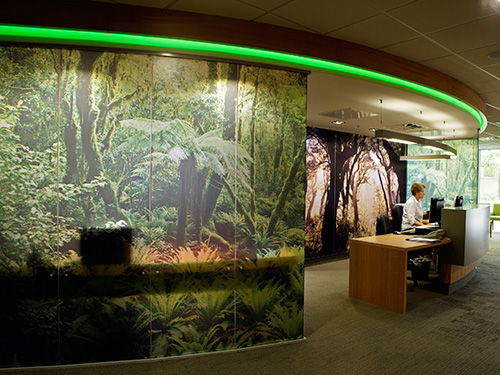
Photographic glass walls
These glass walls have been decorated with self-adhesive clear film. Striking photographs were digitally printed to let plenty of light through, creating a strong image from both sides at any angle. Full image coverage also means full privacy, with only a shadow visible.
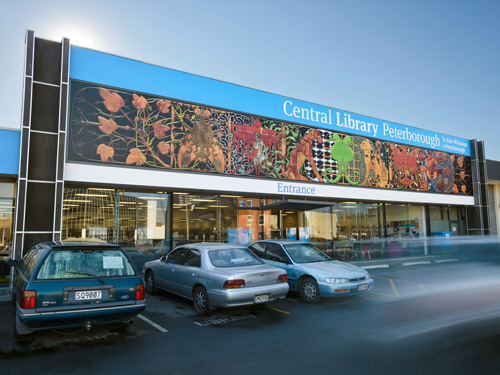
Library window graphic
We digitally printed this artwork onto translucent self-adhesive film. The idea was to create a vibrant image enhanced by the library's internal lighting. Printing on translucent film keeps the image looking good under any lighting condition.
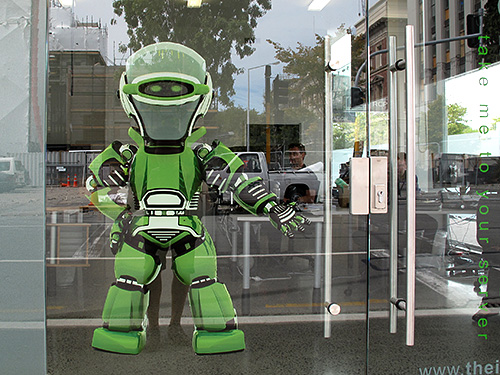
Entrance door character graphic
A simple, effective graphic element, this character was digitally printed and profile cut from self-adhesive vinyl, then applied to the inside of the entrance door glass.
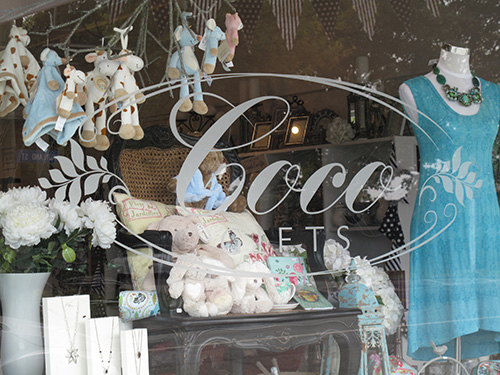
Classic window frosting
A classic, effective use of window frosting film. The profile cut logo remains visible without overly interfering with the view through to the window display. Different lighting angles make the frosted film more or less dominant depending on the time of day.
FAQs
What's the difference between window frosting and window etching?
Traditional etching was done through sandblasting glass. Modern "etch effect" window treatments are usually achieved using self-adhesive films that imitate the sandblasted look, without altering the glass itself.
What is one-way window film and how does it work?
One-way film allows an image or view to be seen from one side of the glass while remaining private from the other. It typically requires the image side to have brighter lighting than the opposite side to work effectively.
Can window graphics be used for privacy as well as branding?
Yes. Frosted films, printed vinyl, and translucent film can all provide varying levels of privacy while still allowing branding, artwork or decorative patterns to be displayed.
Why is etch striping used on glass doors and windows?
Etch striping is commonly used as a safety measure, making glass doors and windows more visible so people don't accidentally walk into them.
This is a look back at a past post. Some details may have changed since it was first published, get in touch with us for current information.
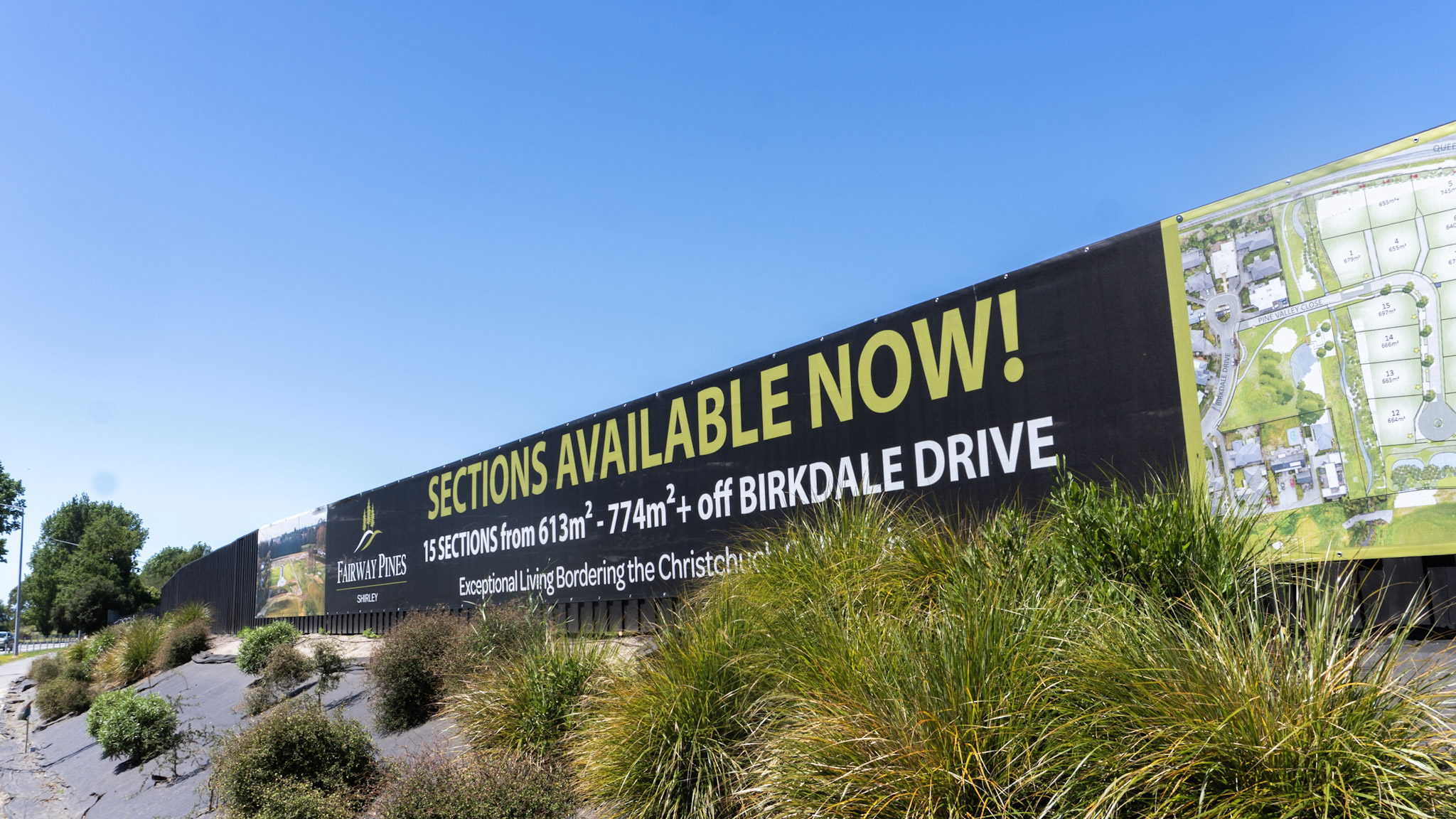
Custom Banners in Christchurch and Across NZ: Materials, Sizes and Choosing What's Right for Your Job
.jpeg)
Choosing a Signage Company in Christchurch: Questions to Ask Before You Commit