
Client Case Study: Hidden On Show

The University of Otago’s iconic Clock Tower is more than just masonry and clockwork, it is the backdrop for thousands of graduation photos and a symbol of New Zealand’s academic heritage.
When Salmond Reed Architects and the University of Otago faced a logistical nightmare, essential stone conservation clashing with the mid-May Capping Ceremony, they didn't settle for “eyesore” scaffolding. Instead, they reached out to us to create a photographic precedent for heritage sites in New Zealand.
The Challenge - Protection vs Presentation
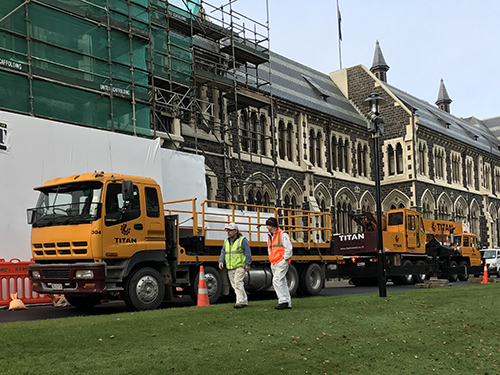
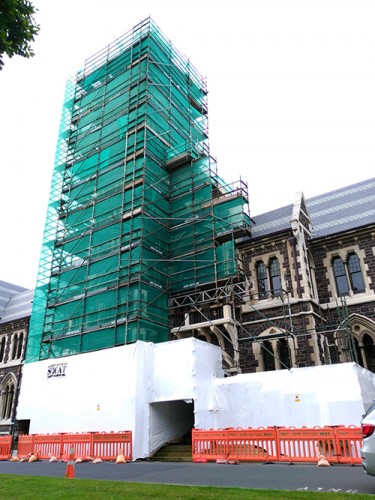
The Clock Tower was shrouded in scaffolding for vital survey and repair work. Normally, for a high-profile event like the Capping Ceremony, the university would face a difficult choice to either dismantle the scaffold at an immense cost only to re-erect it weeks later, or leave the scaffold up, potentially ruining the graduation photos of hundreds of students.
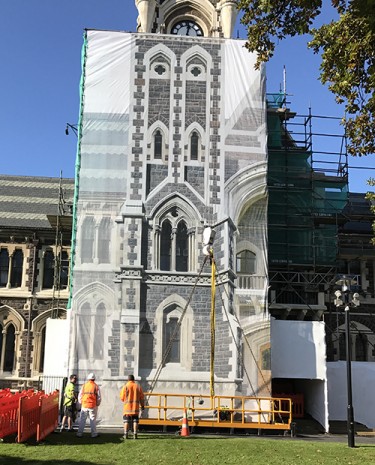
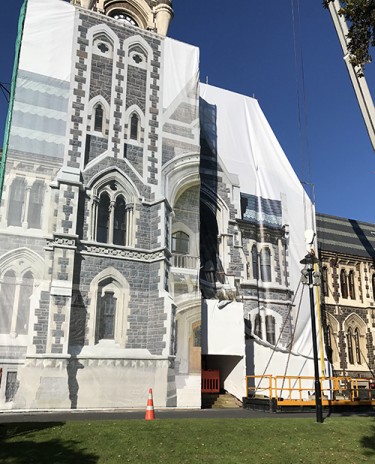
Salmond Reed Architects proposed a third, more creative option - Photographic Scrim. Inspired by European heritage sites, the goal was to cover the scaffold with a life-sized, high-resolution photograph of the building itself.
What We Did
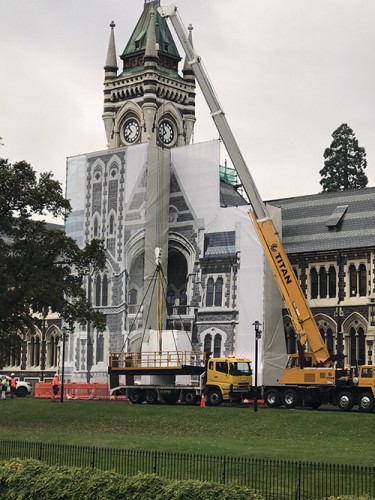
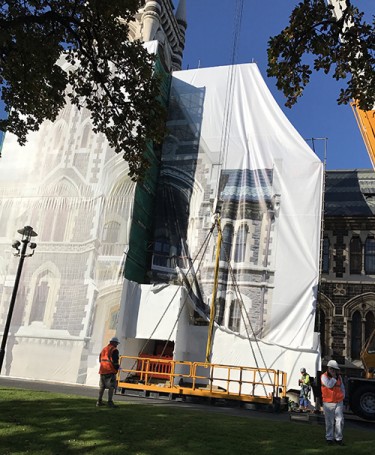
The clock was ticking, quite literally on this one! Because the scaffolding hadn't originally been designed to hold large-scale banners, our team had to work in close coordination with United Scaffold and Salmond Reed to find a structural and aesthetic fit. Using rectified survey photographs provided by the architects, we went to work on a massive scale.
- Precision Printing: We printed high-durability PVC mesh sections to withstand the Dunedin wind.
- Massive Scale: We welded the sections into four enormous banners. The largest two panels measured 18m x 8.5m and 18m x 9m.
- Seamless Installation: We hemmed the edges and used heavy-duty eyelets to cable-tie the building directly onto the scaffolding frame.
The Results
The result was a scale replica of the Clock Tower that allowed stone conservation to continue behind the scenes while providing a "clean" architectural backdrop for the public. Salmond Reed and Otago University staff were delighted with the end result and received many very positive comments.
The project set a new precedent for heritage building work in New Zealand. By opting for a photographic shroud, the University saved the significant costs of dismantling scaffolding while ensuring the campus remained "photo-ready" for its most important day of the year.
"Everyone worked so hard together as a team to achieve as good as possible solution for the Graduates’ special day." Candida Rolla, Master Degree in Architecture and Heritage Conservation, Salmond Reed Architecture Ltd.
Custom Banners in Christchurch and Across NZ: Materials, Sizes and Choosing What's Right for Your Job
.jpeg)
Choosing a Signage Company in Christchurch: Questions to Ask Before You Commit